Program

The program will be updated. We reserve the right for changes.

Keynote speakers

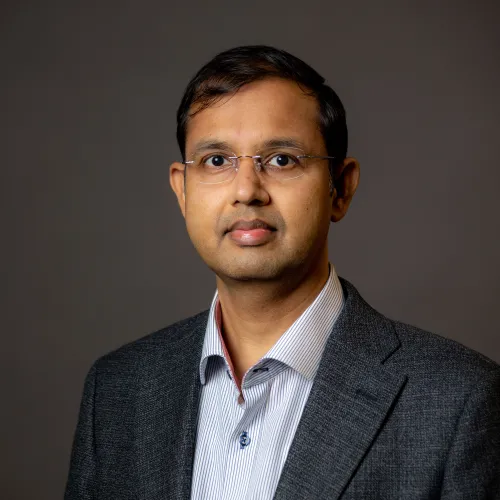
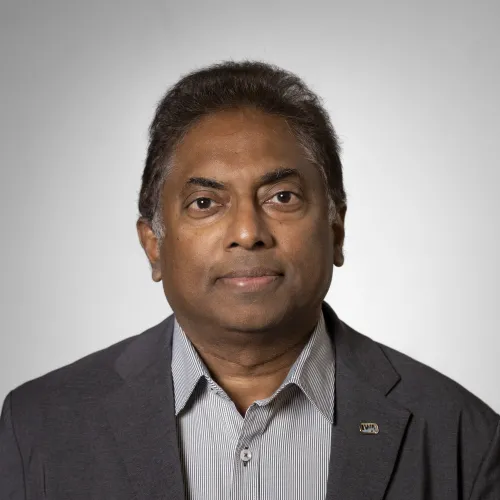
Harsha Ratnaweera

Harsha Ratnaweera is the President of the European Water Association (EWA) and serves on the Board of Directors of the International Water Association (IWA), where he is a Distinguished Fellow. He has been a Professor of Water and Wastewater Engineering at the Norwegian University of Life Sciences (NMBU) since 2012, and at Qingdao University of Technology in China since 2025. He also holds an adjunct professorship at the United Nations University – FLORES in Germany, and several honorary Professorships in Eastern Europe and Central Asia.

Prior to his tenure at NMBU, Dr. Ratnaweera was the Director of International Projects and Innovation at the Norwegian Institute for Water Research (NIVA), where he worked for 20 years. He earned a PhD in Civil Engineering (1992) from the Norwegian University of Science and Technology (NTNU) and an MSc in Chemical Engineering (1987) from the National Technical University of Ukraine (KPI).

In 2024, Dr. Ratnaweera was elected a Fellow of both the European Academy of Sciences and the Norwegian Academy of Technological Sciences. He has also received numerous awards from national, provincial, and city governments in China. In recent years, his work has centered on digitalization and the green and circular economy within the water sector, focusing especially on the use of digital tools in process surveillance and control.
Ari Koistinen

Ari Koistinen is a Group Manager at the Finnish Environment Institute (SYKE), where he oversees operational flood and hydrological forecasting. He directs scientific and expert projects related to hydrological modeling, climate change impacts, and water resources management, working closely with water-sector stakeholders in Finland and internationally across both the public and private sectors.

Koistinen has over 25 years of experience in hydrological modeling, forecasting system development, and expert roles related to water resources. Before his current role, he served as a Research Scientist and Senior Research Scientist at SYKE, focusing especially on the development of hydrological simulation and forecasting systems and the application of ensemble weather forecasts in hydrological forecasting.

In addition to his research and expert responsibilities, Koistinen is a Lecturer at Metropolia University of Applied Sciences, teaching mathematics, statistical methods, programming, data analytics, and the fundamentals of modeling and simulation. He holds an M.Sc. (Philosophy) in Mathematics from the University of Helsinki.

Maria Valtari

Maria Valtari, MSc (Tech), serves as Head of Unit at the Helsinki Region Environmental Services Authority (HSY), where she is responsible for research and development activities in wastewater treatment. In addition to efficient wastewater treatment, HSY focuses on developing methods to reduce climate impacts and promote the circular economy in wastewater treatment. Valtari has more than twenty years of experience in the development of wastewater treatment both in Finland and internationally. In her doctoral research at Aalto University, Valtari examines antimicrobial resistance in sludge treatment processes.

Santiago Gómez-Ruiz

Santiago Gómez-Ruiz is Full Professor of Inorganic Chemistry at Universidad Rey Juan Carlos (Madrid, Spain). He leads the COMET-NANO research group and is part of the Institute for Research in Technologies for Sustainability (ITPS) of the Universidad Rey Juan Carlos. His research combines inorganic and coordination chemistry with nanomaterials design to create hybrid functional platforms for environmental and biomedical applications. A key line of his group’s work addresses water remediation through the development of nanoengineered adsorbents and multifunctional materials, including functionalized nanostructured semiconductors and hybrid metal-containing systems, designed to capture and eliminate organic pollutants and emerging contaminants. His approach integrates rational materials design (porosity, surface chemistry, and active-site engineering), robust physicochemical characterization, and performance testing aimed at realistic conditions. Through collaborative, multidisciplinary projects, he advances materials that couple efficiency with practical considerations such as stability, recyclability, and scalable processing

Scientific Committee