Study field
Technology
Area of study
Electrical engineering
Degree
Bachelor of Science in Technology + Master of Science in Technology
Credits
180 (bachelor's) + 120 (master's) ECTS credits
Duration
3 + 2 years (3 years of bachelor's studies + 2 years of master's studies)
Language
English
Study type
Degree studies
Form of study
Contact teaching
Location
Lappeenranta
Application period
Starts: 1 September 2026 at 8:00 (UTC+3)
Ends: 30 April 2027 at 23:59 (UTC+3)
Fees for non-EU/EEA students
Application fee: EUR 100.

Tuition fee: EUR 12,000/academic year. An early bird discount of EUR 2,000 is available for the first year.

No fees/scholarships for EU/EEA students.
Additional info
The application period may close early if all places in the programme are filled.

Studies start in autumn 2027.
left
right
LUT-yliopiston sähkötekniikan opiskelijoita

Why study electrical engineering?

left


Electricity is central to the transition towards a more sustainable future. Clean energy, electrified transportation, digital technologies, and modern industries all depend on reliable electrical systems and skilled engineers who can develop, improve, and maintain them.

right

Electrical engineering is ideal for students who are curious about how technology works and want to understand the systems behind modern society. The field combines scientific thinking, problem-solving, and practical engineering to create solutions that support an increasingly electrified world.

How to apply

left

Apply to the programme through rolling admission: complete the online application form and submit required documents during the admission period.

If you meet all the requirements, you will receive admission without any competition, as long as there are places available. 

If you have any questions about applying, please contact [email protected].

  1. Check the admission requirements
  2. Prepare your documents
  3. Send out your online application
right

Degree structure

left
Ihmisiä LUTin viestintätieteiden luennolla
right

The Bachelor's Programme in Electrical Engineering leads to the degree of Bachelor of Science in Technology, B.Sc. (Tech.), which is 180 ECTS credits. 

What will you learn?

left

In this programme, you will learn how electricity is generated, transmitted, and used in modern society. You will gain a solid understanding of electrical engineering fundamentals and the technologies that support the transition towards clean energy and an increasingly electrified world.

You will learn to analyse electrical circuits and electronic systems, apply mathematics and science to engineering problems, and understand how modern electrical technologies work. You will also gain experience in programming, measurement, and engineering design and develop the skills needed to create and improve technical solutions.

The programme provides a strong foundation for progressing to master's studies and developing specialised expertise in different fields of electrical engineering.
 

right

Programme contents

  • Electrical energy systems
  • Electrical machines
  • Electronics
  • Embedded systems
  • Mechatronics
     

How will you learn?

left

Most of your studies take place on campus during weekdays. Occasional online courses, as well as courses combining online and on-campus teaching, provide variety and flexibility to your study methods and schedule.

Your studies include

  • theoretical lectures
  • exercise sessions
  • company visits
  • projects
  • individual and group assignments
  • extensive laboratory work
right
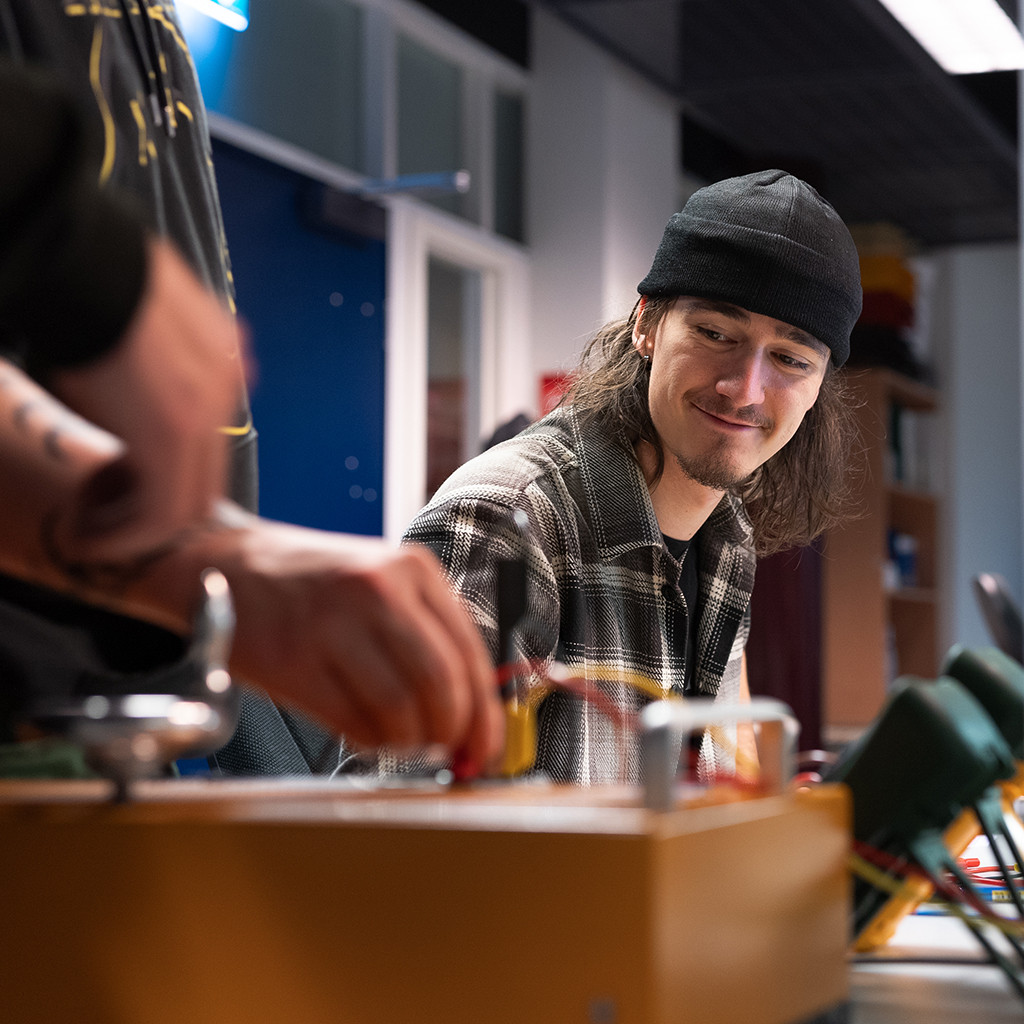
LUT-yliopiston sähkötekniikan opiskelijoita tekemässä kytkentöjä

What can you do with your degree?

left

Electrical engineering expertise is needed in a wide range of industries, including energy, manufacturing, technology, transportation, and infrastructure.

With the knowledge and skills gained in the programme, graduates can contribute to the design, testing, operation, and development of electrical systems, embedded technologies, and engineering solutions. Depending on the country and employer, bachelor's graduates may start their careers in engineering, technical specialist, testing, or project roles.

The degree also provides an excellent foundation for progressing to master's studies and developing more specialised expertise in electrical engineering.

 

right

Job options for graduates

  • Electrical engineer 
  • Test engineer 
  • Technical specialist
  • Embedded systems engineer 
  • Project engineer 
     

Continue to a master's programme

After completing a bachelor's degree in electrical engineering, you can continue your studies in one of the following electrical engineering master's programmes at LUT. Each programme is 120 ECTS credits and takes two academic years to complete.

Three programmes are offered in English:

You can also apply to an international double degree master’s programme organised in cooperation with a partner university. The programme lasts two years, and you will receive a degree certificate from both universities. In both programmes, the first academic year is completed at LUT's Lappeenranta campus. For the second academic year, you will move to the partner university, where you will also complete your master's thesis.

  • At Wroclaw University of Science and Technology, you will study renewable energy systems or control engineering. You will earn a Master of Science in Technology degree with a specialisation in electrical engineering.
  • At Leibniz University Hannover, you will study energy and electrical engineering. Depending on your choice, you will graduate with a Master of Science in Technology degree with a specialisation in either electrical or energy engineering.

In addition, you can apply separately to the Sähkötekniikan DIODI (in Finnish) master's programme. 

Quality of education

We are committed to providing high-quality education. International programme accreditations ensure the continuous development of our education and the international recognition of our graduates’ degrees. LUT University is one of the world’s top 350  universities in the Times Higher Education (THE) World University Rankings, which is one of the most highly regarded university ranking systems.

The integration of mechanical engineering, electrical engineering, energy technology, environmental technology, and IoT skills provides you an excellent foundation to compete for the most sought-after jobs in industries related to modern sustainable hybrid technology solutions. You will be working for a better future with the best companies.

See also