

LUT University has released its third Energy Outlook, which provides an up-to-date overview of the opportunities and challenges of the accelerating energy transition. This year's report focuses on energy security, examining the topic from technological, environmental, and societal perspectives. The report aims to support efforts to strengthen Finland's energy security on the path towards a fossil-free power system and industry.
“Secure energy systems are vital for the functioning of society and for international competitiveness. The energy transition is already well underway, but geopolitical shifts, the climate crisis, and biodiversity loss are creating new kinds of risks and uncertainties,” says Olli Pyrhönen, dean of the LUT School of Energy Systems.
A record 41 experts from the School of Energy Systems contributed to the report. The publication is available free of charge in both Finnish and English.
Energy security goes beyond technical reliability
The new Energy Outlook highlights the importance of resilience in the energy transition and the impact of changes in the geopolitical operating environment – particularly on the availability of critical minerals. In addition, the report analyses how sector integration, circular economy solutions, energy citizenship, and energy literacy influence overall energy system security.
“Energy security is not just about technical reliability. It also includes preparedness for global risks, the sustainable use of natural resources, and the fair distribution of costs and benefits,” emphasises Eeva-Lotta Apajalahti, associate professor specialising in energy and society.
The rapid increase of wind and solar power, hydrogen solutions, and the electrification of heating and transport are reducing emissions and improving self-sufficiency. At the same time, they introduce new security considerations. According to the report’s experts, energy literacy and education must be developed to ensure that renewable energy systems are adopted sustainably, taking into account societal structures and planetary boundaries.
“The transition to cleaner energy is essential, but at the same time, climate solutions are increasingly affecting land use and local environments. Renewable electricity generation requires large areas of land, which means new approaches are needed to balance the green transition with local sustainability and biodiversity,” says Hanna Paulomäki, junior researcher and Energy Outlook project manager.
Research-based insights to support the energy transition
The energy transition is one of the focus areas of LUT University’s research and education. The Energy Outlook is based on scientific research and provides reliable information on the state and development trends of the energy system and different energy technologies.
LUT has published the Energy Outlook every other year since 2022. The previous two focused on carbon neutrality and secure, sustainable, and affordable energy. Written in an accessible style, the report is intended for experts, decision-makers, and anyone interested in the topic.
Comments, feedback, and interview requests can be emailed to [email protected]. Our experts’ email addresses follow the format [email protected].
LUT University is a leader in energy research
- The LUT School of Energy Systems employs over 300 researchers in the field of energy.
- LUT’s energy systems research focuses on areas including
- solar and wind power,
- the hydrogen economy and Power-to-X technologies,
- power electronics and high-speed technology,
- heating and refrigeration technology,
- nuclear power and nuclear safety,
- bioenergy,
- smart grids and energy system IoT solutions.
- LUT develops energy technology solutions in close collaboration with companies.
- Read more about LUT's current energy research.


More information:
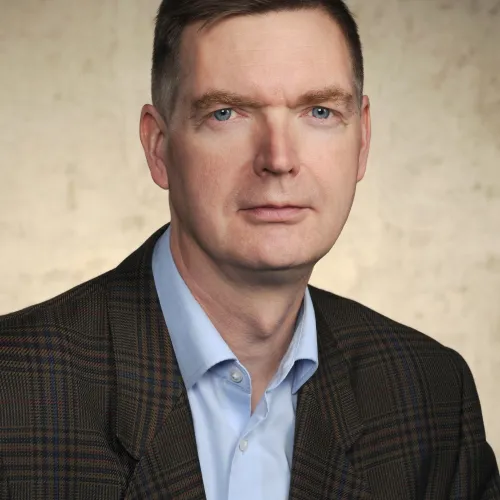

Eeva-Lotta Apajalahti


