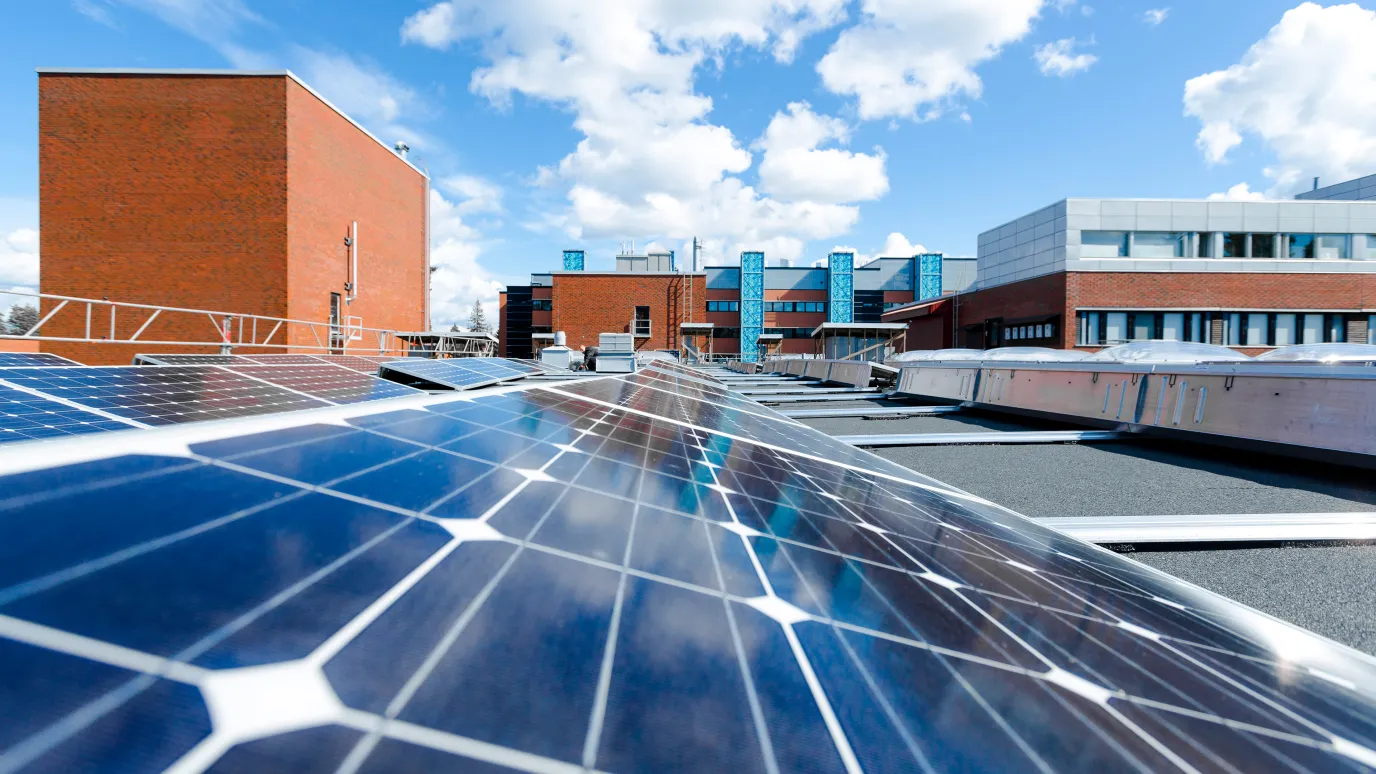

Within the LUT University OffgridH₂ project, Chile, the Iberian Peninsula and Finland were studied as distinct regional contexts for assessing the conditions for hydrogen competitiveness. Each illustrates a different pathway to building a competitive hydrogen ecosystem as part of their Power-to-X Economy.
Chile benefits from exceptional solar and wind resources and is pursuing an export-oriented hydrogen and hydrogen-derivatives industry. The Iberian Peninsula combines strong renewable resources, particularly large-scale solar PV electricity generation, with growing hydrogen production and infrastructure links to European markets that allows to export hydrogen-based products, such as e-ammonia, e-methanol, and e-kerosene jet fuel. Finland, meanwhile, is building on competitive wind power, expanding clean electricity generation and an established industrial base, with national policy explicitly seeking to capture greater value from hydrogen and hydrogen-derived products. Together, these regions provide useful examples of how renewable resources, infrastructure, market access and industrial capabilities can shape hydrogen competitiveness, in particular for its derivatives, such as e-ammonia, e-methanol, and e-kerosene jet fuel.
But investors do not invest in countries. They invest in projects. National policies may determine which countries make the shortlist, but investment decisions are ultimately shaped by conditions at the project location including renewable energy resources, grid capacity, industrial demand, infrastructure and access to markets.
More off-grid is not always better
These local conditions also shape how a hydrogen project should be designed. A common assumption is that reducing dependence on the grid automatically improves competitiveness by increasing energy autonomy and limiting exposure to electricity market prices. But greater self-sufficiency comes at a cost. It requires additional renewable generation, storage and system flexibility, increasing the capital investment needed to operate the project.
The Chile case studies in the OffgridH₂ project illustrate this trade-off. Dr. Dmitrii Bogdanov, a post-doctoral researcher on the project, explains that the modelling results showed, costs began to increase when the share of off-grid e-fuel production exceeded roughly 60%. The additional investment required for greater energy autonomy eventually outweighed its benefits. The most competitive solution was therefore neither fully grid-connected nor fully off-grid, but a carefully balanced combination of the two.
The lesson extends beyond the Chilean case: abundant renewable resources alone do not determine hydrogen competitiveness. What matters is how energy resources, infrastructure, flexibility and demand come together at a specific location.
This also points to a broader question: As the number of locations able to produce hydrogen competitively increase, where will competitive advantage come from?
Competing beyond hydrogen production costs
Professor Christian Breyer, who leads the OffgridH2 work package on green hydrogen production in different geographical locations, points out that China makes this challenge particularly visible. China's large-scale manufacturing, integrated supply chains and rapid cost reductions in renewable energy technologies suggest that access to low-cost hydrogen may become less of a differentiating factor over time. As hydrogen production expands globally, even regions with exceptional renewable energy resources may find it increasingly difficult to compete on production costs alone.
If this trend continues, competitive advantage may increasingly shift from producing the cheapest hydrogen to creating the greatest value from it through manufacturing ecosystems, infrastructure and downstream industries. Europe's opportunity may therefore lie not in hydrogen itself, but in what hydrogen enables: green steel, e-fuels, e-chemicals and other energy-intensive products that can benefit from competitive low-carbon hydrogen. For the special case of Finland, the availability of biogenic carbon from pulp and paper industry is a competitive edge to convert a not use waste of the present into a valuable feedstock in near future to enable together with hydrogen e-fuels and e-chemicals.
Competitive advantage therefore comes not only from the hydrogen itself, but from the infrastructure, skilled labour, supplier networks, industrial demand and interconnected value chains built around it. For investors, this brings the discussion back to location. The most attractive projects may be those where competitive energy resources meet existing industrial capabilities, infrastructure and demand, creating a credible pathway to downstream production. This is particularly relevant for Finland, where an established industrial base already provides a platform for hydrogen-enabled manufacturing.
Hydrogen production capacity can be built in many locations, but industrial capabilities are far more difficult to replicate or relocate. As competing regions build these capabilities and ecosystems, catching up becomes harder. For Finland, the challenge is therefore not only to attract hydrogen investment, but to turn its existing industrial strengths into new hydrogen-enabled industries before competing locations become more established.
Visit also the project webpage