

The Collegium’s long-term mission is to enable conditions for radical innovations and breakthrough solutions, eventually addressing the wicked problems. The Collegium aims to unlock drivers behind scientific and technological breakthroughs by analyzing the structures, processes, incentives and cultural factors that could support innovation instead of suppressing it. This endeavor aims at creating a tradition of knowledge, understanding, and thinking in terms of breakthroughs, eventually inspiring further ambition to reach new ones.
left
The System Earth Collegium (SEC) at LUT University is a groundbreaking, long-term initiative designed to tackle the world's most challenging and complex menaces – the wicked problems. These are multifaceted issues like
- climate change and diversity loss,
- resource depletion and freshwater scarcity,
- energy crises and instability,
- conflicts and societal inequities.
All these demand multidisciplinary solutions. Conventional policies and practices often nourish incremental progress and swift publication rather than risking for the radical innovations necessary to address these global challenges.
The System Earth Collegium aims to complement this paradigm by cultivating a new culture of scientific inquiry focused on breakthroughs via understanding the premises leading to them.


The current structure and funding of knowledge drive researchers to pursue rewards in the present science paradigm instead of taking risks to achieve breakthroughs.
left
Mission and vision
right
Ambition in innovation
What sets the System Earth Collegium apart is its commitment to navigating towards solutions by understanding what really needs to change in the system of academic inquiry, and where do we find the catalysts, drivers, and true premises for breakthroughs. This approach will offer a valuable resource for any scientific institution dedicated to pushing the boundaries of knowledge.
Collegium outreach
News and articles


Inaugural quest

The System Earth Collegium initiative begins in 2025 with an inaugural quest.
As of its launch in 2025, the System Earth Collegium’s inaugural quest is to initiate a reflection/self-reflection cycle addressing the following questions:
- The academic system of inquiry, its structure and drivers: where should we take it?
- The role of the Collegium: how can it best support driving the change?
The Collegium therefore ignites a process to catalyze structural change in the academic system while admitting an honest feature of self-correction to evolve towards maximum impact.
left
Identify
Identify and study the elements that form the complex matrix of processes leading to scientific breakthroughs and radical innovations, and the structures suppressing them.
Examine
Examine the role of these elements and their interconnections, and find ways to affect those elements.
right
Develop
Develop a transformative system capable of identifying nonconformist ideas that have the potential to revolutionize science and produce breakthrough innovations.
Discover
Discover new ways to test and support these ideas and give them a chance in the paradigm that is dominated by incremental progress and fast publications.
Collegium Fellows
left
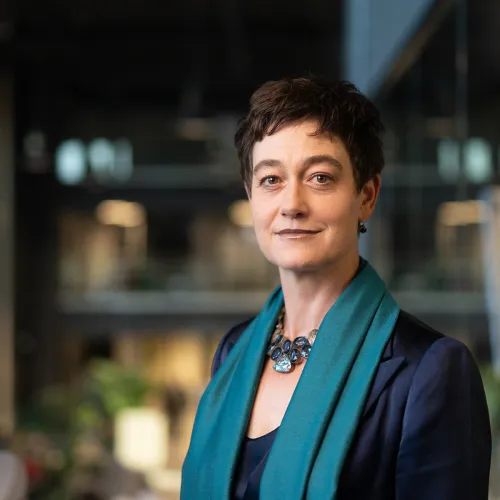
Kirsten Dunlop
Dr. Kirsten Dunlop is Chief Executive Officer at Climate KIC, Europe’s leading climate innovation agency and community. She brings to her role a deep conviction in our capacity to learn and evolve into a climate-resilient society, and her over 30 years of experience catalyzing systemic transformations in a career spanning academia, consulting, banking, and the insurance industry, across three continents.
right
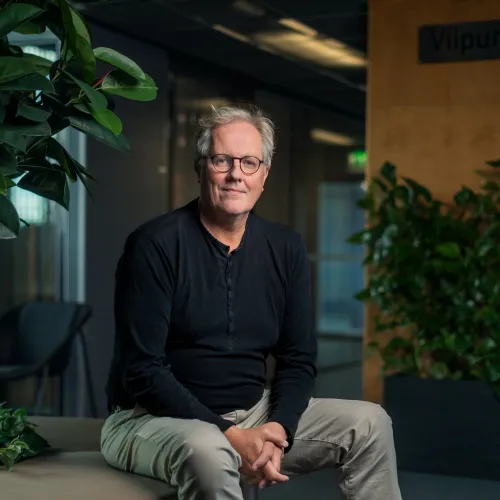
Karl-Erik Michelsen
Prof. emer. Karl-Erik Michelsen of LUT has had a long and international career. Michelsen's research interests include science, technology and the modern world. He is a humanist in his approach to life, but at the same time, humanism is a constant subject of criticism for him. Michelsen's research aims to transcend the boundaries of science and influence the surrounding society.
left
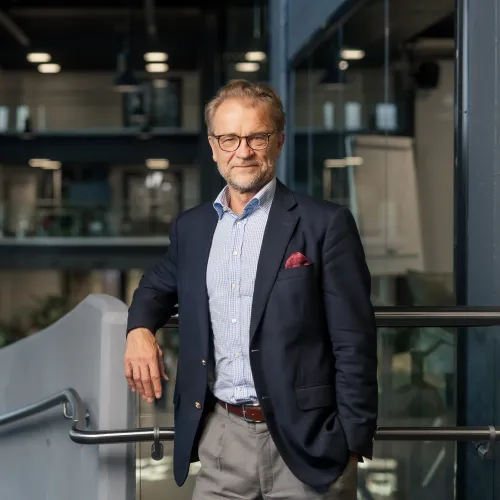
Mikko Kosonen
Dr. Mikko Kosonen is the previous Chair of Aalto University and former President of Sitra. His mission is to promote new future-oriented operating models to build Finland’s sustainable well-being. Kosonen aims to help society change for the better by providing foresight, practical experimentation and developing sustainable business practices.
right

Simon Saunders
Prof. emer. Simon Saunders from the University of Oxford is the leading professor in philosophy of physics. His research domain includes philosophy of science particularly in relation to foundational questions in quantum theory, relativity, and cosmology.
left

Lubomila Jordanova
Lubomila Jordanova has served as CEO of Diginex (NASDAQ: DGNX) since early 2026, following its acquisition of Plan A, the ESG platform she founded. She co-founded the Greentech Alliance and sits on the boards of the EIB, WEPA, and Glint Solar. Studied in LSE and is doing executive studies in HBS. Obama Europe Leader, MIT Innovator Under 35, and Forbes 30 Under 30 alumna.
right

Michael Ramage
Professor Michael Ramage is a structural engineer trained in architecture at MIT with a PhD from Cambridge University. Founding Director of the Centre for Natural Material Innovation, his built work, from the Rwanda Cricket Stadium to Super Tall Timber research, demonstrates what structural ambition and natural materials can achieve, and makes the case for bio-based construction as one of the most credible paths to a low-carbon world.
left

Siddharth Chatterjee
Siddharth Chatterjee is CEO of Global Neighbours, a Vienna-based think tank advancing 1.5-track diplomacy between Europe, China, and wider Asia. Until March 2026 he was the UN Resident Coordinator in China – the Secretary-General’s senior-most representative there – and previously in Kenya. Over nearly three decades with the UN, he led development, humanitarian, and peace operations across Africa, the Middle East, and Asia. He is a visiting professor at Tsinghua University and a Princeton University graduate.
right

Maria Balinska
Maria Balinska’s career has spanned education exchange, journalism and non-profit leadership. She began in international news at the BBC where for ten years she served as Editor World Current Affairs Radio. Maria was on the launch team and then editor-in-chief of The Conversation US, bringing together academics and journalists. From 2019-25, she was executive director of the US-UK Fulbright Commission. She is currently a practitioner associate at Oxford's Centre for Democratic Resilience.
left

Daniel Hires
Daniel Hires is a systems change practitioner, advisor and ecosystem builder. He served as Chief Marketing Officer of the Inner Development Goals Foundation and built networks and programs for green entrepreneurs across MENA with UN Environment. Earlier he co-founded a global social innovation community. Today, through Impact Calling, he works with leaders and institutions to create the conditions that let meaningful change take hold.
right
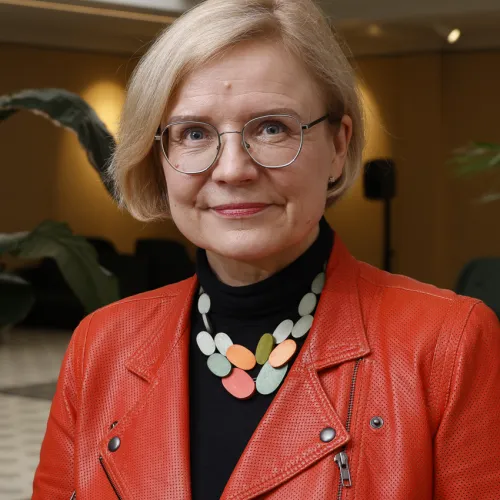
Kirsimarja Blomqvist
Kirsimarja Blomqvist is a Professor of Knowledge Management at LUT University Business School. Her research interests relate to trust, knowledge management, innovation, networks, digitalization, and new forms of organizing. She has served on the Academy of Finland Council for Culture and Social Sciences and the National Committee for Research on Artificial Intelligence and Digitalization. She is a founding member and board member of the FINT network of trust researchers.
Building on our trailblazer legacy
left
right
Building on LUT University's reputation as a trailblazer in scientific research, the System Earth Collegium will enhance the university's ability to drive innovation and solve pressing global issues by bringing different disciplines seamlessly together.
By fostering a culture that actively seeks reasons behind leaps of advance and encourages further ground-breaking research, the Collegium aims to elevate academic standards and contribute significantly to the advancement of science and technology.
This initiative represents a unique opportunity to transform the way we approach the most urgent challenges of our time – through new knowledge on what does it really take, and by seeding the ambition where it has the best grounds for germination.
Contact information
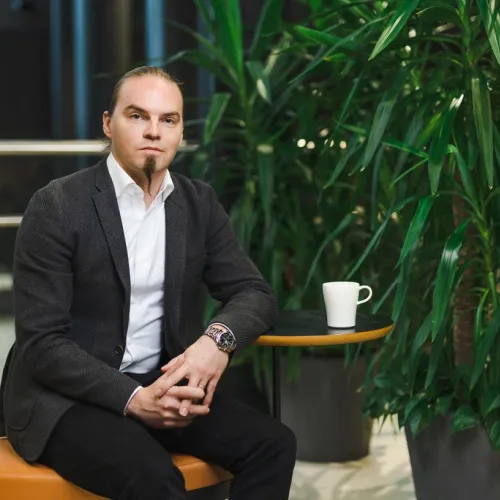

Tiina Kukkurainen
Partnership Coordinator
Performance guidance and planning