
LUT University has concluded that Finland simply cannot afford to keep wasting the potential of universities. LUT has taken the initiative into its own hands and established the System Earth Collegium, which is developing research culture toward scientific breakthroughs and radical innovations.
”Our goal is to reform the academic system and enable the faster identification of innovations hidden in the research world as well as their transfer into practice and the commercialization pipeline. Research results must be channeled more effectively toward solving the wicked problems plaguing our planet. We also need to raise our level of ambition,” says Petri Ajo, chief growth officer at LUT.
Increasing the impact of research
Finland’s innovation system lacks effective incentives. Researchers have no reason to pursue real breakthroughs if the goal is simply to publish a lot and publish fast.
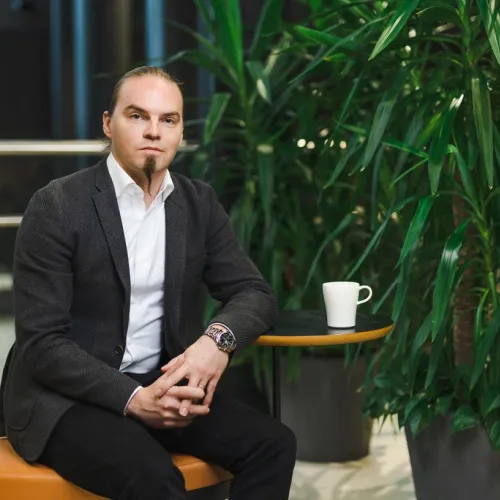
”The current university system mainly measures publications and degrees. Societal impact and the transfer of research into practice aren’t assessed adequately. We need new kinds of metrics and operating methods to increase research impact,” says Pasi Vainikka, LUT’s recently appointed industry professor and Solar Foods’ co-founder.
Large corporations often focus shortsightedly on making profits. What’s needed are bold and ambitious owners who would be willing to invest in growth. This can be a challenge in listed companies. If owners remain faceless, companies’ operations can lack the necessary dynamism. For example, in Sweden and Denmark, the industrial history is different, and long-term ownership and foundations have enabled large corporations to renew themselves and utilize research more effectively than in Finland.
System Earth Collegium Fellow Mikko Kosonen points out that the incentives of universities, companies, and funders are not aligned. Companies don’t pay sufficient attention to research-based, long-term development of new business. Also, public funding too heavily favors the financing of so-called incremental innovations that support companies’ current operations. According to Kosonen, solving the problem requires examining the relationships between different actors. New operating models and concrete examples are needed to show how the gap between research and innovation can be narrowed.
”The past 20 years without economic growth shows that it doesn’t pay to continue doing what we’ve always done. Now we need to try something different,” Vainikka adds.



New operating models to increase companies’ capacity for renewal
Kosonen cites as an example the Electric Mobility Research Center (EMRC), a research platform for electric transportation established by LUT and Kempower. It’s a new kind of collaborative model that Finland needs more of. In the EMRC model, corporate collaboration isn’t limited to a relationship between a single discipline and a company but rather aims to create broader collaborative structures that respond to changes in the market and society.
”In my opinion, good examples of a new type of collaboration between universities and companies include the EMRC and the ABB-led H2 Springboard project, which accelerates Finland’s hydrogen economy. The EMRC’s governance model has succeeded, among other things, in that the research center’s director doesn’t advance the interests of a single organization but operates as a shared resource and develops the research center as a whole,” Kosonen analyzes.
According to Vainikka, the origin stories of the EMRC and the fast charger company Kempower are good examples of how hands-on financing and a new company can quickly generate a significant cluster, unlike traditional large corporations. This demonstrates the potential of the new operating model, and the System Earth Collegium intends to support its further refinement over the coming year.
”LUT’s flat hierarchy, creativity, and capacity for change enable experimentation with new operating models and the pursuit of societal impact, even though incentives and funding mechanisms pose challenges. I see the System Earth Collegium functioning like a board, under which there are operational actors and projects doing concrete development work and corporate collaboration,” Vainikka describes.
Results will appear with a delay, but the development of operations and the emergence of new types of collaboration is possible even in the short term. That’s what Finland needs so that years of stalled economic growth, high unemployment, and the welfare state’s distress don’t balloon into an unmanageable crisis.
”Societal impact is, alongside education and research, a core mission of universities, and one that deserves greater investment going forward. As a small, highly educated, and collaborative country, Finland could have excellent opportunities to produce breakthrough innovations with a new operating model,” Kosonen concludes.


More information