

LUT Blossom is a growth event, during which our Lahti campus will become an arena for fresh ideas, networking, and new partnerships.
How can the Finnish industry sector be made carbon neutral? Petteri Laaksonen, Research Director of Energy Systems at LUT, and Taija Hämäläinen, Research Director of Forest and Bioindustries, address already the question.
“It would be more accurate to talk about a fossil-free industry rather than carbon neutrality, because carbon will continue to be part of industrial processes in the future. The key is eliminating fossil-based fuels and chemicals,” Laaksonen says.
The timeline will be long. Even in the best-case scenario, the change will not take effect for at least ten years. And achieving this would require the industry to begin large-scale action immediately.
The measures required are extensive and go deep into existing structures. However, they also offer Finland the possibility of gaining significant competitive advantages, even on a global scale.
left
Biogenic carbon dioxide needs to be utilised
The forest industry accounts for about 17 per cent of Finland's exports. Turning it fossil-free requires two development paths in the forest sector. The first is the capture and utilisation of biogenic carbon dioxide produced by pulp mills. For every tonne of pulp produced, the mill generates roughly two tonnes of carbon dioxide.
Biogenic carbon dioxide can serve as a renewable raw material, for example in P2X processes. Combined with green hydrogen, it can be used to produce e-methanol, which can be used directly as a fuel in shipping.
Methanol will also be a primary raw material for transport fuels and the chemical industry. According to estimates, its commercialisation could generate export potential worth billions of euros for Finland.
“Biogenic carbon dioxide is the only approved carbon source in the EU, and Finland and Sweden together produce 56 per cent of it. In addition to this, we have affordable electricity, which these processes require,” Laaksonen explains.
Thanks to the EU's blending obligation, the market for e-methanol and fuels refined from it already exists and continues to grow.
“On a global scale, the amount of synthetic methanol-based fuels Finland could eventually produce will still be small enough that the demand will be guaranteed,” Laaksonen says.
In addition to fuels, e-methanol can be refined into olefins. These are raw materials the chemical industry uses in the production of various adhesives, solvents, plastics and fuels. In other words, biogenic carbon dioxide has several applications in the chemical industry, each replacing fossil-based alternatives.
right



left
Wood should be utilised to its full potential
Another development supporting a fossil-free forest industry is the comprehensive utilisation of the biomass it uses, i.e. wood.
Currently, only about half of the wood utilised in Finland is harnessed for high-value purposes. The rest is often burnt in energy plants. While burning is technically a form of utilisation, it diverts valuable raw materials away from more productive uses. For example, lignin from wood has several potential applications.
“It can be used in various adhesives and coatings, as a filler for asphalt, and it can even replace the graphite used in batteries,” Hämäläinen explains.
Graphite is one of the fossil-derived minerals the EU classifies as a critical strategic raw material. Increased use of biomass also supports the EU's bioeconomy strategy, which aims to replace fossil raw materials with renewable alternatives whenever possible.
Hämäläinen emphasises that fully utilising biogenic carbon dioxide and biomass from forest industry does not require increased production.
“The Finnish forest industry already produces biogenic carbon dioxide and biomass. If a cubic metre of wood is harvested, all possible added value should be extracted from it,” she says.
right
The expertise of LUT and other universities complement each other
- LUT has capabilities across the entire value chain, from electrical and energy engineering and separation technology to the development of consumer products and packaging.
- LUT’s compact size has always enabled effective, smooth dialogue between different faculties and fields. This strengthens interdisciplinary expertise, which is essential for solving today’s global challenges.
- LUT also benefits from strong, ongoing collaboration with industries. Of all Finnish universities, LUT receives the largest share of external funding from business partnerships.
- The Finnish Hydrogen Research Forum was jointly established by LUT and the University of Oulu, which includes all Finnish universities, VTT Technical Research Centre of Finland, and the Finnish Environment Institute. The forum hosts monthly discussions on the direction of hydrogen research in Finland.
left

right
A fossil-free industry sector requires cooperation and increases security of supply
A fossil-free industry sector cannot be achieved through the actions of individual mills alone. The change goes deep into existing structures. Laaksonen and Hämäläinen highlight the need to redefine entire value chains.
“Factories in different sectors have traditionally operated in silos. Steel mills produce steel, pulp mills pulp, and so on,” Hämäläinen describes.
A fossil-free industry sector requires cross-industry optimisation and collaboration.
In practice, this means, for example, directing the biogenic carbon dioxide produced by pulp mills to the chemical industry as a raw material for fuel production. Steel mills, in turn, will shift to producing fossil-free steel using hydrogen reduction. This requires large amounts of electricity, linking industrial sites more tightly to energy production.
“Interdependencies between different industries in Finland will grow, but at the same time, we have the opportunity to break away from oil and gas imports,” says Hämäläinen.
This directly increases Finland's self-sufficiency and strengthens the security of supply. The dependence on global supply chains decreases, and resilience to crises improves.
“We can never eliminate all supply chain dependencies, but in the case of oil and gas, there is a genuine opportunity to break them,” Laaksonen says.


More information:

Taija Hämäläinen
Research Director
LENS Common activities
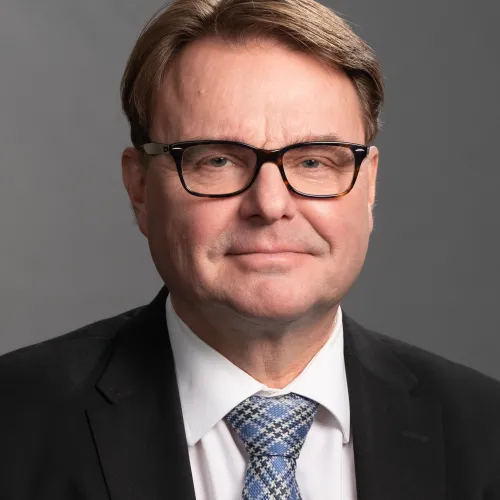
Petteri Laaksonen
Research Director
LES Common activities


