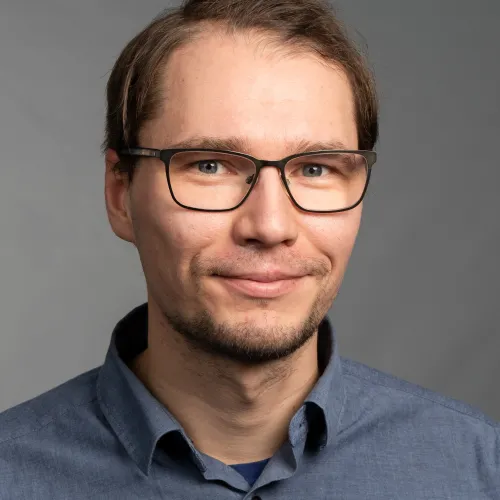

The demand for heating and refrigeration solutions and experts who can deliver them is so strong that LUT University has appointed Antti Uusitalo as an associate professor to its newly established professorship in the field – the first and only of its kind in Finland.
“Heat pump demand is growing because systems are becoming electrified and organisations are aiming to improve energy efficiency and replace fossil fuels. Heat production based on local sources also enhances energy security,” Uusitalo says.
Heat pumps enable utilising waste heat
Heat pumps are used for heating in a wide variety of applications, from industry and residential buildings to large properties and even electric vehicles. Heat pumps enable the use of many different heat sources and local energy production: heat can be extracted from the ground, air, water bodies, and industrial processes.
Similarly, refrigeration technology is widely used in building climate control and cold chain applications such as food storage. Both heating and refrigeration will become increasingly important as extreme weather becomes more frequent.
Current research and development focus particularly on high-temperature heat pumps, natural refrigerants, and intelligent control systems that optimise heating based on electricity pricing.
“Industry has enormous potential for waste heat recovery, especially from low-temperature sources. Heat pumps can boost temperature levels, making it possible to use waste heat for applications like process water or steam production,” Uusitalo explains.
The Curious People newsletter shares our solutions for helping build resilient communities, industry, and businesses while promoting the energy transition and the regenerative use of natural resources.
Heat pumps can contribute to district heating
Data centres are a significant source where large heat pumps can convert waste heat into district heating.
“District heating is diversifying, and combustion-based solutions are declining. Heat pumps, electric boilers, and waste heat recovery are becoming more common, and solutions can vary locally from city to city,” Uusitalo describes.
The EU has also set targets for increasing heat pump use in heating, which steers industry development and investments. In addition to improving energy efficiency, the goal is to reduce EU countries’ dependence on imported oil and natural gas, thereby strengthening energy security.
In many European countries, heating systems are still based on fossil energy, which releases emissions that contribute to global warming. Transitioning to renewable electricity and fossil-free heating is essential to stopping global warming.
The EU’s updated F-gas Regulation also targets emission reduction by promoting the shift toward natural refrigerants. Refrigerants act as heat transfer agents in heat pumps, air conditioning systems, and refrigeration units by changing state from liquid to gas and back. Natural refrigerants include carbon dioxide, propane, and ammonia. The transition to natural refrigerants reduces greenhouse gas emissions by decreasing the use of fluorinated refrigerants, which have a strong warming effect on the climate.
Heat pump industry employs thousands
Finland has a large number of heat pumps and companies in the industry. Thousands of Finns work for heating and cooling system and component manufacturers, engineering firms, and installation and maintenance service providers. The heating and refrigeration technology professorship at LUT University, established with support from industry companies and associations, addresses future workforce needs and advances product development in the field.
“LUT has long conducted heating and refrigeration research at the Department of Energy Technology, including the thermodynamics and fluid dynamics laboratories. We also have research infrastructure that enables experimental research in addition to computational studies. Our work includes research funded by Business Finland as well as direct product development work with companies,” Uusitalo explains.
Heating and refrigeration fundamentals are covered in LUT’s energy technology and electrical and mechanical engineering education. Moreover, a new master’s-level minor subject in heat pumps and refrigeration technology is also being introduced. The course selection will expand further when LUT launches new civil and construction engineering degree programmes in 2027.
“Heat pump use is the most economically viable in areas where gas is expensive or poorly available while electricity is relatively affordable. In other words, Finland and the other Nordic countries have strong prospects for increasing heat pump deployment in the future. In addition, Finnish heat pump expertise will certainly be in high demand globally when heat pump use becomes more widespread,” Uusitalo predicts.
More information: