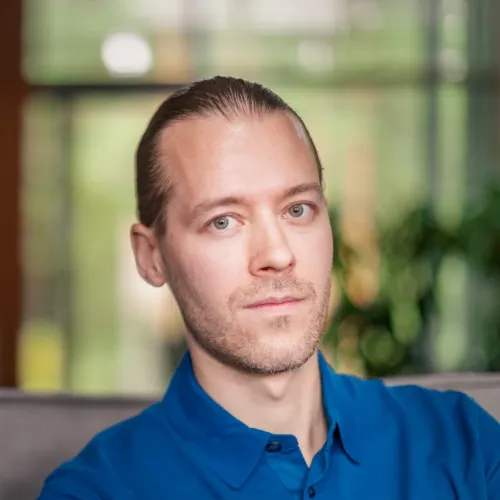

Paavo Ritala denies any contradiction in what he does for a living, despite appearances. As a professor of strategy and innovation, he has spent years exploring generative AI and speaking publicly about why it’s crucial to keep pace with AI development both at the societal and individual level.
In contrast, Ritala is also a sustainability researcher. He worries about economic growth overshadowing the planet’s resilience. What are we really doing with AI? Is productivity the ultimate measure of everything?
“Today’s AI is the worst you’ll ever use – that’s the new saying. Technology is easy to get excited about. It’s fascinating because it’s a little scary. Next, we’ll see robots becoming an even bigger part of everyday life. But what’s missing is humanity’s shared vision for using AI,” Ritala says.
According to Ritala, we already have the technology necessary to maintain the Earth’s ecological balance at a relatively low cost. What we lack is investment and direction at scale.
“Right now, money is flowing in the wrong direction. Decisions are made by those who hold money and power.”
When it comes to future workforce skills, the latest World Economic Forum report places AI and data no higher than halfway down the list. At the top are analytical thinking, resilience, flexibility, leadership, and social influence – followed closely by creativity and motivation.
“Everyone wants their work to be valued. The key question is: What will we do with the time AI frees up? In an ideal scenario, people would be doing something original, and the discussion strongly emphasises the role of knowledge workers. A farmer’s perspective, for example, is very different.”
Ritala’s own plan is to figure out how AI can create something truly useful instead of building excess infrastructure and churning out cheap plastic products. He aims to make an impact both in academia and in practice.
“One way to make a difference is by sharing expertise through teaching. That’s why I’m one of the instructors in LUT’s revamped Executive MBA programme.”
Fewer than 7,000 researchers worldwide made the list
Ritala began his academic journey in 2006 and is now among the most cited researchers globally. In November, he was named to the Clarivate Highly Cited Researchers list – a recognition for scholars whose work has demonstrated significant and broad influence in their fields. This year, fewer than 7,000 researchers worldwide made the list, and only two of them are business scholars from Finland.
What delights Ritala most is that his research makes a real impact. Other scholars have benefited from his years of work.
“I’ve always been interested in how the world changes. That’s why my research focuses on current topics, like innovation. I’m also very active in discussions with other researchers, on social media, and in different networks. I attend international conferences regularly. In fact, I’m almost always on the move.”
This year alone, Ritala has visited scientific conferences in cities such as Bilbao, Copenhagen, and Pisa. He recently received confirmation that he’ll be participating in the Cambridge Clare Hall Visiting Fellowship programme in spring 2026. The brand-new programme, based on a collaboration agreement between LUT and Clare Hall, will take him to the UK for three months. LUT and Clare Hall have also partnered to launch the Global Climate Research Prize, which recognises efforts to tackle climate change.
Considering Ritala’s academic success, it’s surprising he wasn’t that interested in school when he was young.
“School was fine, but I didn’t put much effort in. Friends and gaming were way more appealing. I read sci-fi and coded games,” he laughs.
His story gives hope to secondary school students worried about their grades and life after graduation.
“For most people, grades don’t determine the future. I didn’t really get into research until university, when I had to read scientific articles for my bachelor’s thesis. I realised that fact-based argumentation fascinated me. I got hired by a research group, and that’s how it all started.”
Subscribe to our Curious People newsletter
“If Paavo didn’t exist, we’d have to invent him”
At LUT, people often wonder how Ritala manages to seem so perfect. He has a reputation as a genuinely good guy: he’s polite to everyone, happy to help others, and brings both emotional intelligence and a sense of humour to conversations. He’s lightning-fast at catching illogical points in what someone says, but he does it without embarrassing them.
He has a knack for elevating himself and bringing himself down in the same sentence. When he talks about what’s new with him, academic achievements flow seamlessly into self-deprecating jokes.
“Paavo embodies all the qualities of a researcher. He’s academically gifted, a quick learner, excellent at self-management, and, to top it all off, annoyingly nice and collaborative,” summarises Professor Liisa-Maija Sainio from LUT Business School.
“If Paavo didn’t exist, we’d have to invent him,” Sainio continues.
According to Sainio, it’s especially valuable that Ritala dedicates time to his own university’s strategy and development, even as his academic credentials take him to the international stage – as an editor of top-tier journals, for instance.
“Paavo has helped other researchers advance in their careers. He also looks out for the common good and doesn’t step on others on his way up.”
Kirsimarja Blomqvist, professor of knowledge management at LUT, supervised Ritala’s master's thesis and later co-supervised his doctoral dissertation with Professor Kaisu Puumalainen. Both times, Ritala focused on coopetition – collaboration between competitors.
"Paavo had to wait a while before we got the green light on a larger research project. He kept calling to ask when it would be confirmed. That kind of determination and impatience are great qualities in someone who knows what they want," Blomqvist says.
According to Blomqvist, Ritala was able to break into the international coopetition research network early in his career and eventually became a leading expert in the field. Blomqvist notes that Ritala has also developed a deep understanding of what academic journals expect and how the publication process works.
"I don't know anyone else who actually enjoys peer review! I think Paavo's competitive spirit makes him see critical feedback as an exciting challenge to tackle."
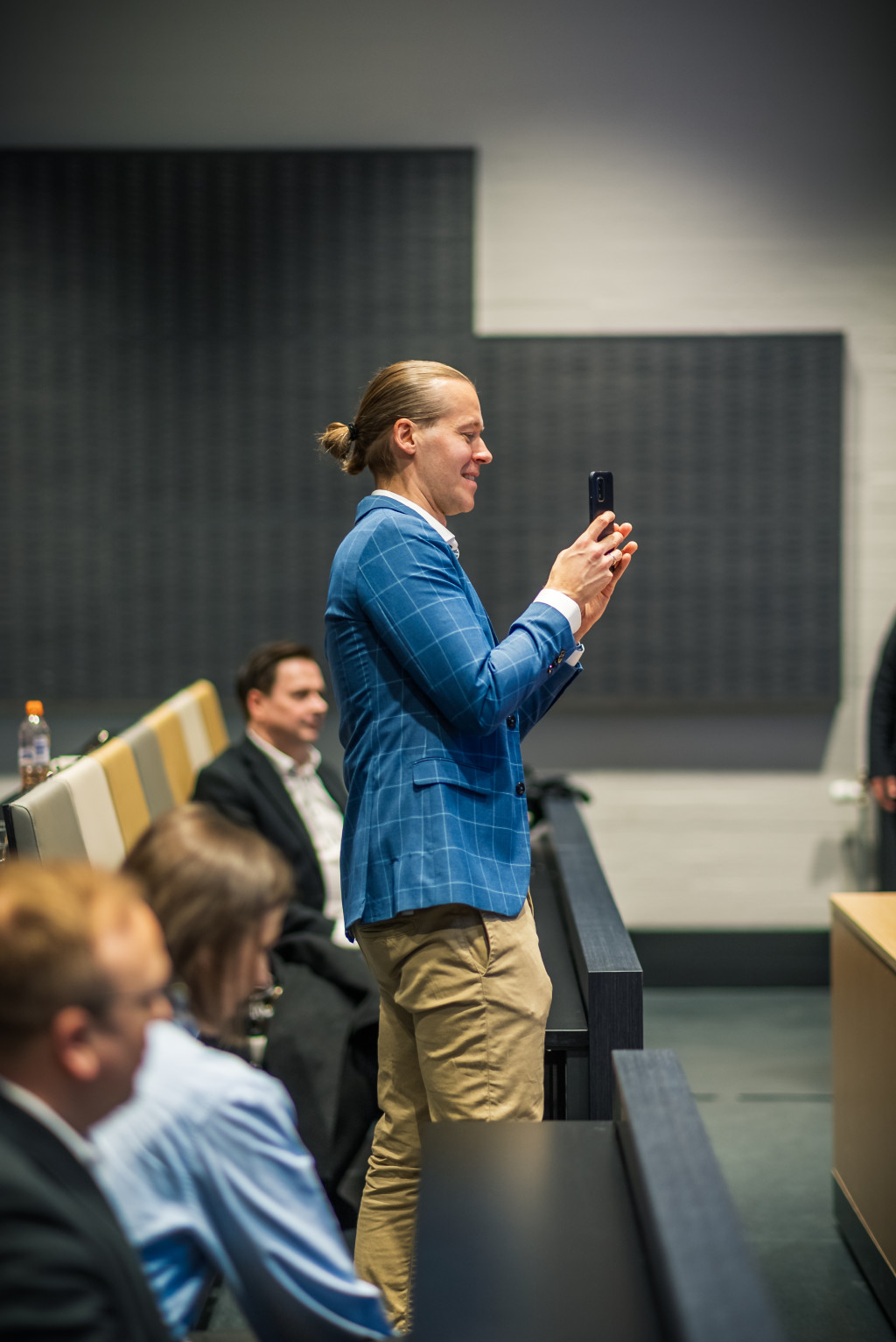
Blomqvist remembers that Ritala wasn't initially thrilled about getting thrown into the deep end to make presentations in research project stakeholder events.
"Now his presentations are outstanding. You can see and hear his enthusiasm all the way in the back row. It's been such a joy watching Paavo’s incredible career unfold. Bravo, Paavo!”
The researcher’s annual cycle of disappointment: 14 rejections
Ritala’s ambition extends to his free time: he’s a passionate runner and can complete a half marathon in under two hours. He’s also learned to play the guitar and drums.
He may have natural talent, but his success is also the result of hard work. In a LinkedIn post, Ritala estimated that preparing funding applications, writing, and attending various funding meetings have consumed years of his research career.
Like any scholar, he’s faced plenty of rejections and has shared them openly on social media. For example, the Research Council of Finland has declined his funding applications 14 times.
Still, Ritala isn’t easily discouraged. He always puts setbacks in perspective: work and life offer plenty of good things despite occasional academic disappointments.
“At home, my wife, daughter, and I hardly ever talk about work. Even though I’m a high-energy person, I love to hide away at our cottage and relax.”
So yes, sometimes his email has an out-of-office notice.


More information: